Qfitlia works in a unique way — Only Qfitlia helps increase thrombin generation and restore balance by lowering a protein called antithrombin. Watch our full “How Qfitlia Works” video below.

How Qfitlia® (fitusiran)
works: helping restore
balance in your body
“We had already tried multiple products that we weren’t successful with. Since Qfitlia approaches the clotting system in a different way, we were hopeful that it would be beneficial to Ben.”
— Rose, Ben’s mother and care partner
Ben has hemophilia B without inhibitors
Currently taking 20 mg of Qfitlia once every other month

Let’s break it down: A step-by-step story of how Qfitlia works
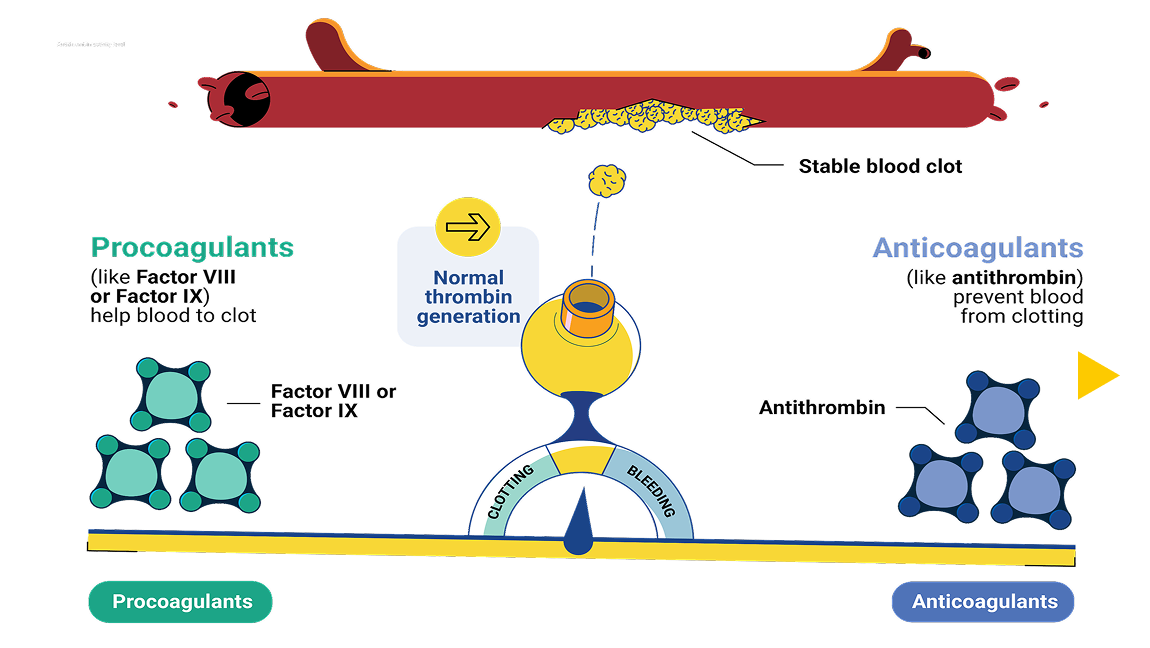
The body controls bleeding and clotting by balancing proteins called procoagulants and anticoagulants
Maintaining balance leads to normal thrombin generation, allowing for effective clotting.
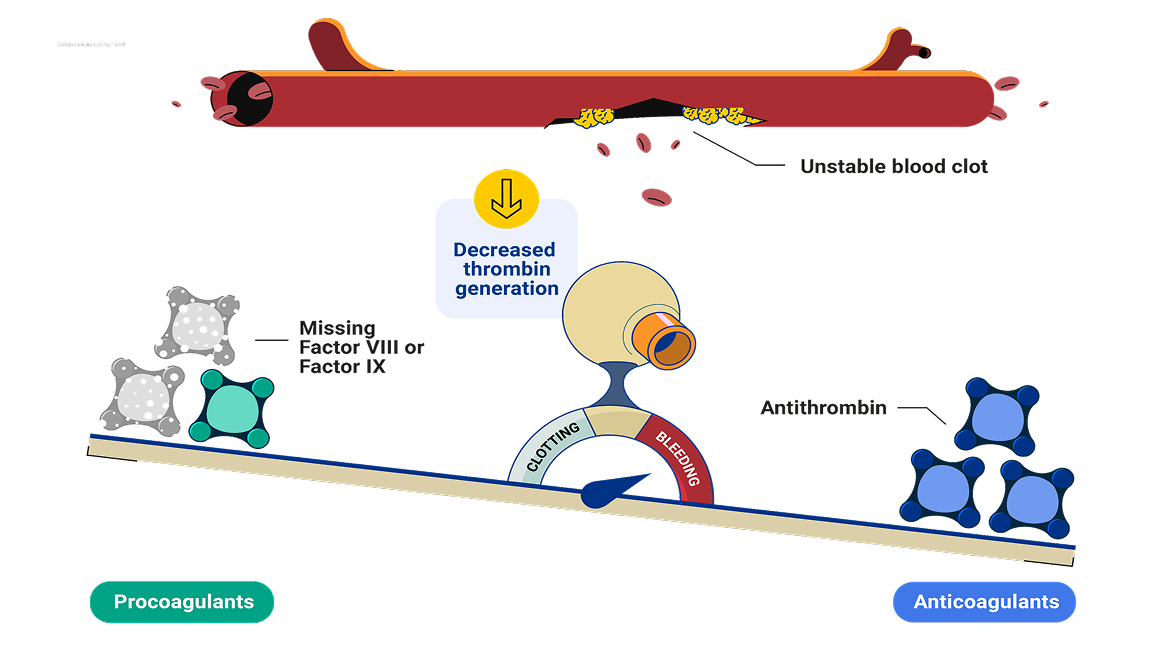
The natural balance between bleeding and clotting is disrupted in hemophilia
When Factor VIII or Factor IX is missing in hemophilia, this balance is disrupted and thrombin generation decreases. As a result, an unstable clot forms and bleeding does not stop. The goal of all hemophilia treatments is to restore balance by generating more thrombin, creating stable clots that can stop bleeding.
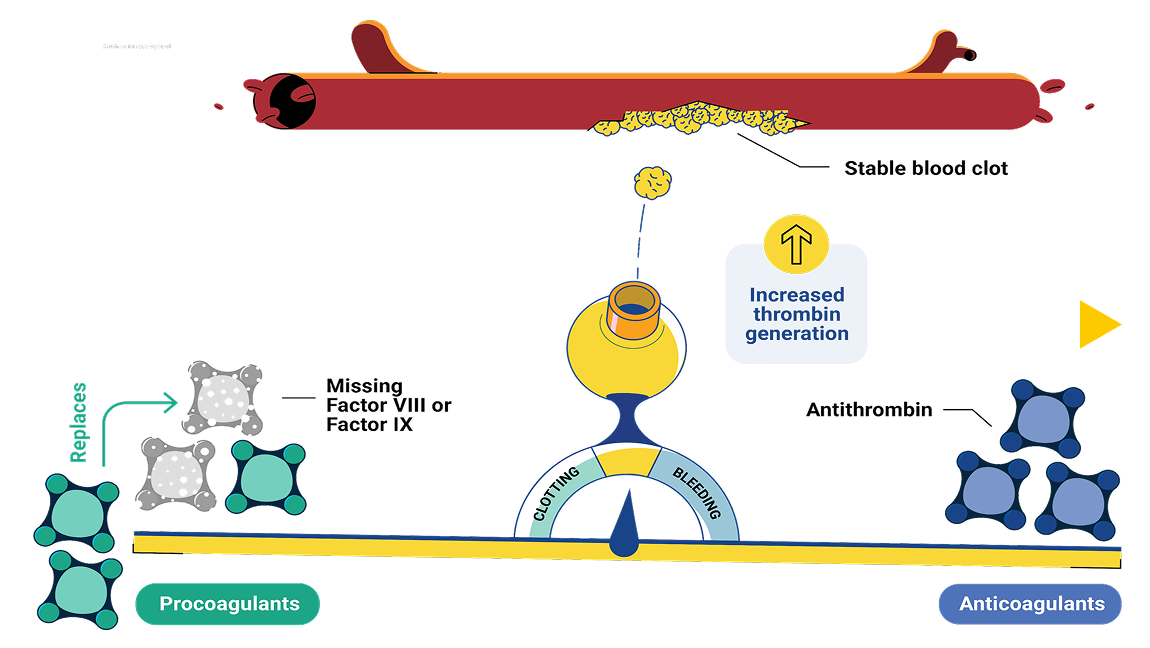
Some hemophilia treatments work by replacing missing clotting factor
Thrombin generation can be restored by adding back the missing Factor VIII or IX to help form a stable clot.
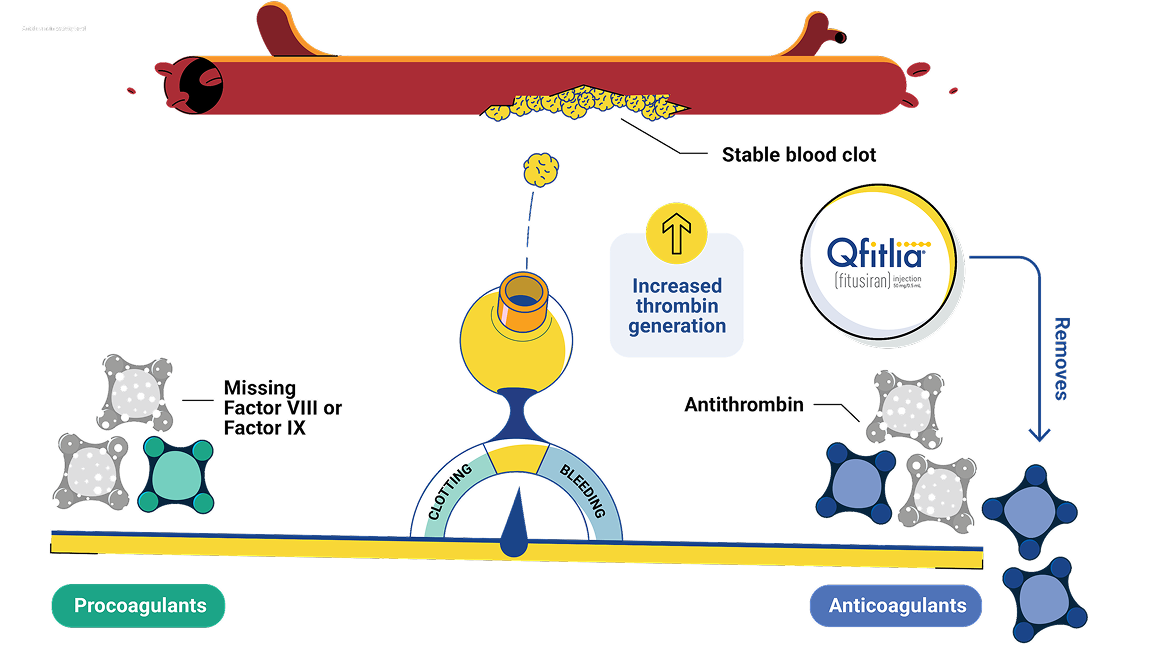
How Qfitlia works differently
Qfitlia helps restore balance by lowering antithrombin and increasing thrombin generation, without the need to add back Factor VIII or IX.
Important Safety Information and Indication
INDICATION
IMPORTANT SAFETY INFORMATION
INDICATION
Qfitlia® (fitusiran) is a prescription medicine used for routine prophylaxis to prevent or reduce the frequency of bleeding episodes in adults and children 12 years and older with hemophilia A or B with or without Factor VIII or IX inhibitors.
It is not known if Qfitlia is safe and effective in children younger than 12 years of age.
It is not known if Qfitlia is safe and effective in children younger than 12 years of age.
IMPORTANT SAFETY INFORMATION
Qfitlia can cause SERIOUS SIDE EFFECTS, including:
Abnormal blood clotting (thrombotic events): Serious blood clots have occurred in people treated with Qfitlia. Qfitlia can cause blood clots to form in the blood vessels in your arms, legs, lungs, heart, brain, eyes, or head. Your risk of blood clots is greater if your antithrombin (AT) blood level is persistently less than 15% or if you have certain other conditions. Your healthcare provider (HCP) will check your AT blood levels before and during treatment with Qfitlia
Gallbladder disease: Qfitlia can cause gallstones and inflammation of your gallbladder, which might require surgery to remove your gallbladder. Tell your HCP right away if you develop stomach pain, indigestion, nausea, or vomiting. Your HCP may temporarily or permanently stop Qfitlia if you develop any of these symptoms
What is the most important information I should know about Qfitlia?
Qfitlia helps your blood form clots. Do not stop using Qfitlia without talking to your HCP. If you miss doses or stop using Qfitlia, you may no longer be protected against bleeding.
Use of a clotting factor concentrate (CFC) or bypassing agent (BPA) to help protect against bleeding must be stopped within 7 days after your first dose of Qfitlia.
Your HCP may prescribe on-demand CFC or BPA if you bleed during treatment with Qfitlia. Carefully follow your HCP’s instructions regarding when to use on-demand treatment with CFC or BPA, including the prescribed dose and timing of the CFC or BPA.
Get medical help right away if you get any of these signs or symptoms of blood clots during or after treatment with Qfitlia:
- Swelling, pain, or redness in arms or legs
- Coughing up blood
- Shortness of breath
- Severe chest pain or tightness of the chest
- Fast heart rate
- Feeling faint or passing out
- Severe or persistent headache
- Difficulty speaking or understanding language
- Feeling confused
- Numbness or weakness in your face, arms, or legs
- Sudden loss or changes in your vision, eye pain, or swelling
What are the possible side effects of Qfitlia?
Qfitlia can cause other serious side effects, including an increase in your blood liver enzymes. Your HCP will do blood tests to check your liver function before and during treatment with Qfitlia
The most common side effects of Qfitlia include viral infection, common cold symptoms, and bacterial infection
These are not all the possible side effects of Qfitlia.
What should I tell my HCP before using Qfitlia?
Tell your HCP about all of your medical conditions, including if you have liver problems, a history of gallbladder disease, are pregnant or plan to become pregnant, or are breastfeeding or plan to breastfeed
Females who are able to become pregnant: Hormonal birth control may increase your risk of blood clots if used during treatment with Qfitlia. Talk to your HCP about effective forms of non-hormonal birth control you can use before starting and during treatment with Qfitlia
Tell your HCP about all of the medicines you take, including prescription and over-the-counter medicines, vitamins, and herbal supplements
Please see full Prescribing Information, including SERIOUS SIDE EFFECTS, and Medication Guide.Learn more about Sanofi’s commitment to fighting counterfeit drugs.